THE SHORT ANSWER
Start here.
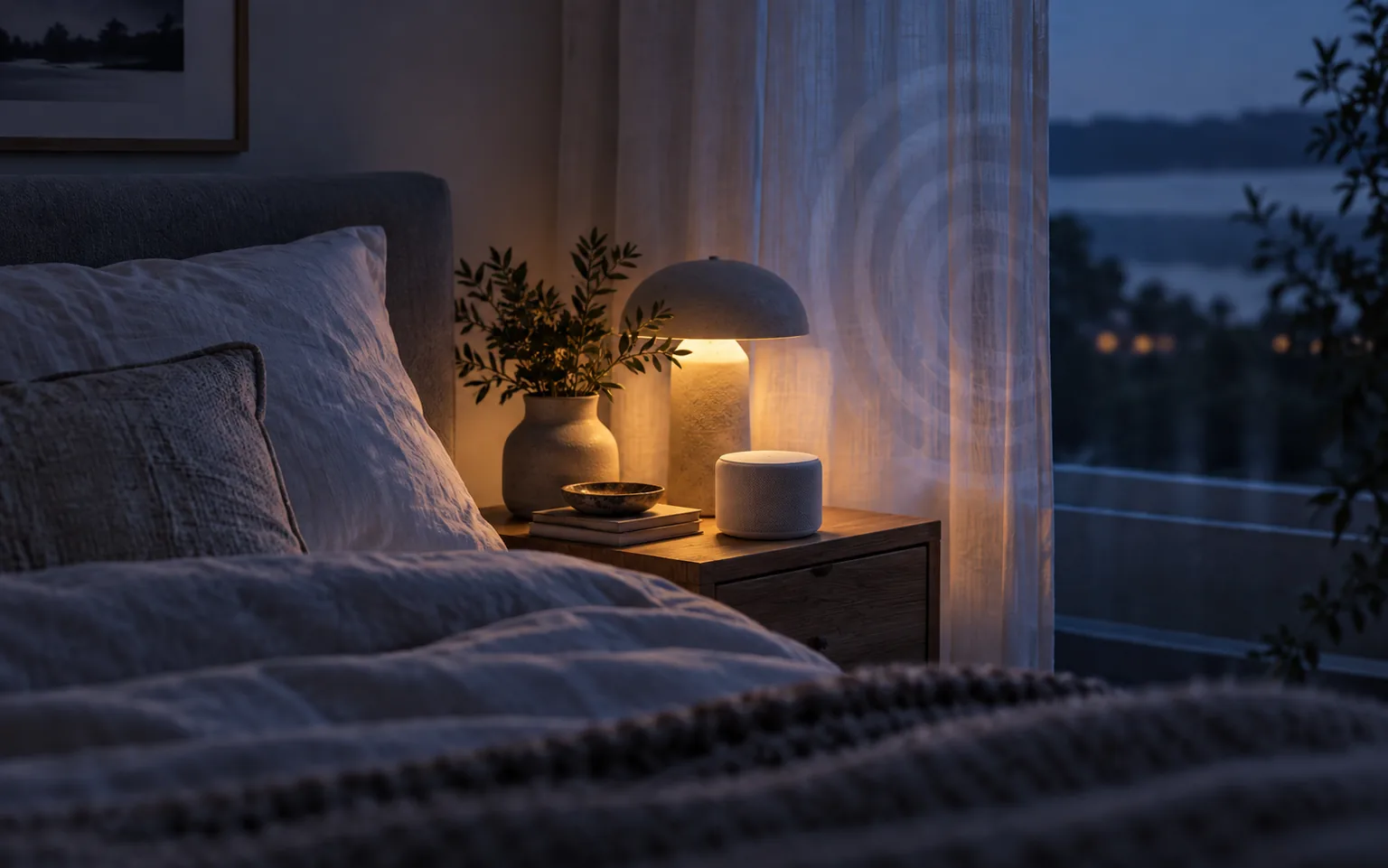
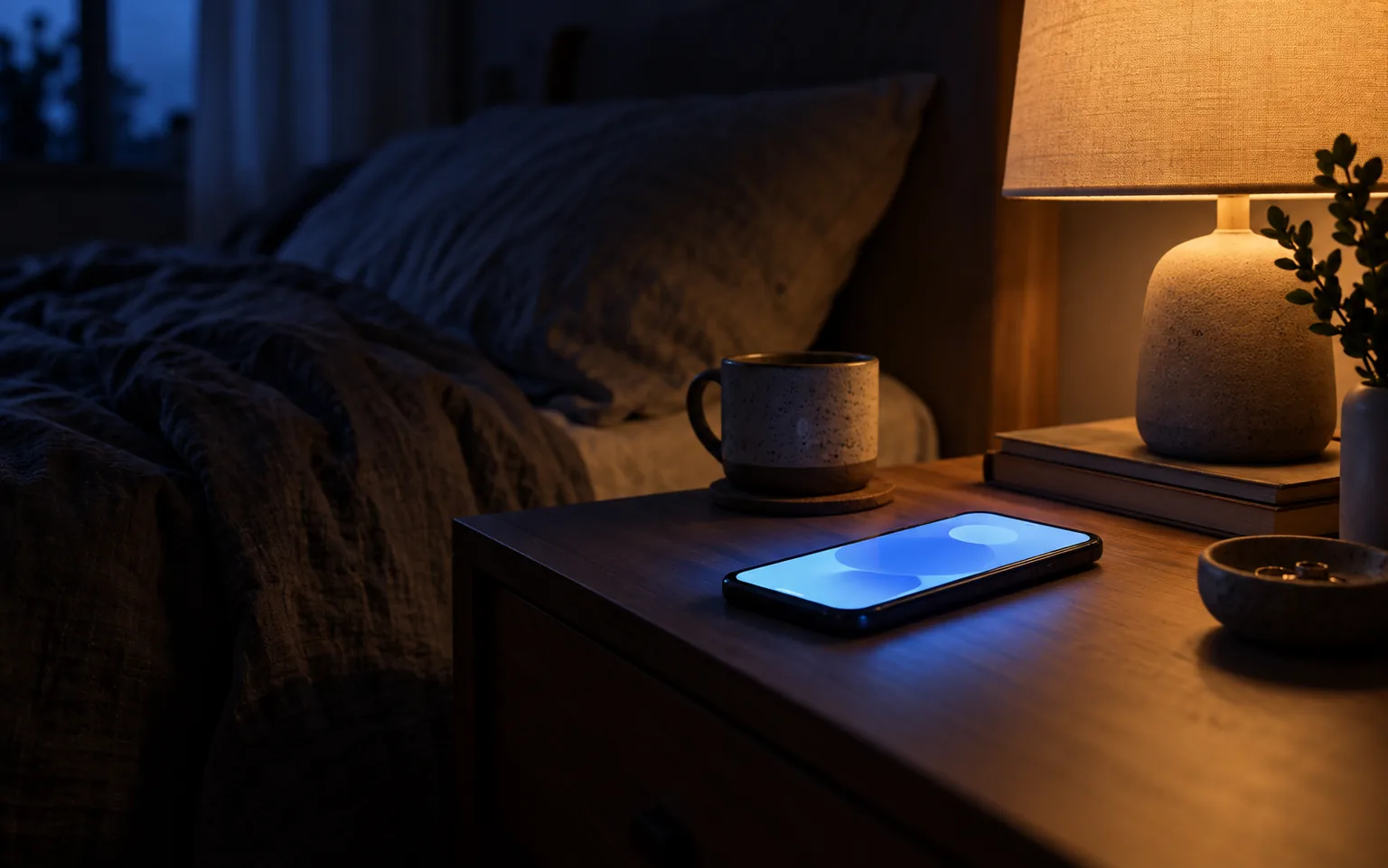
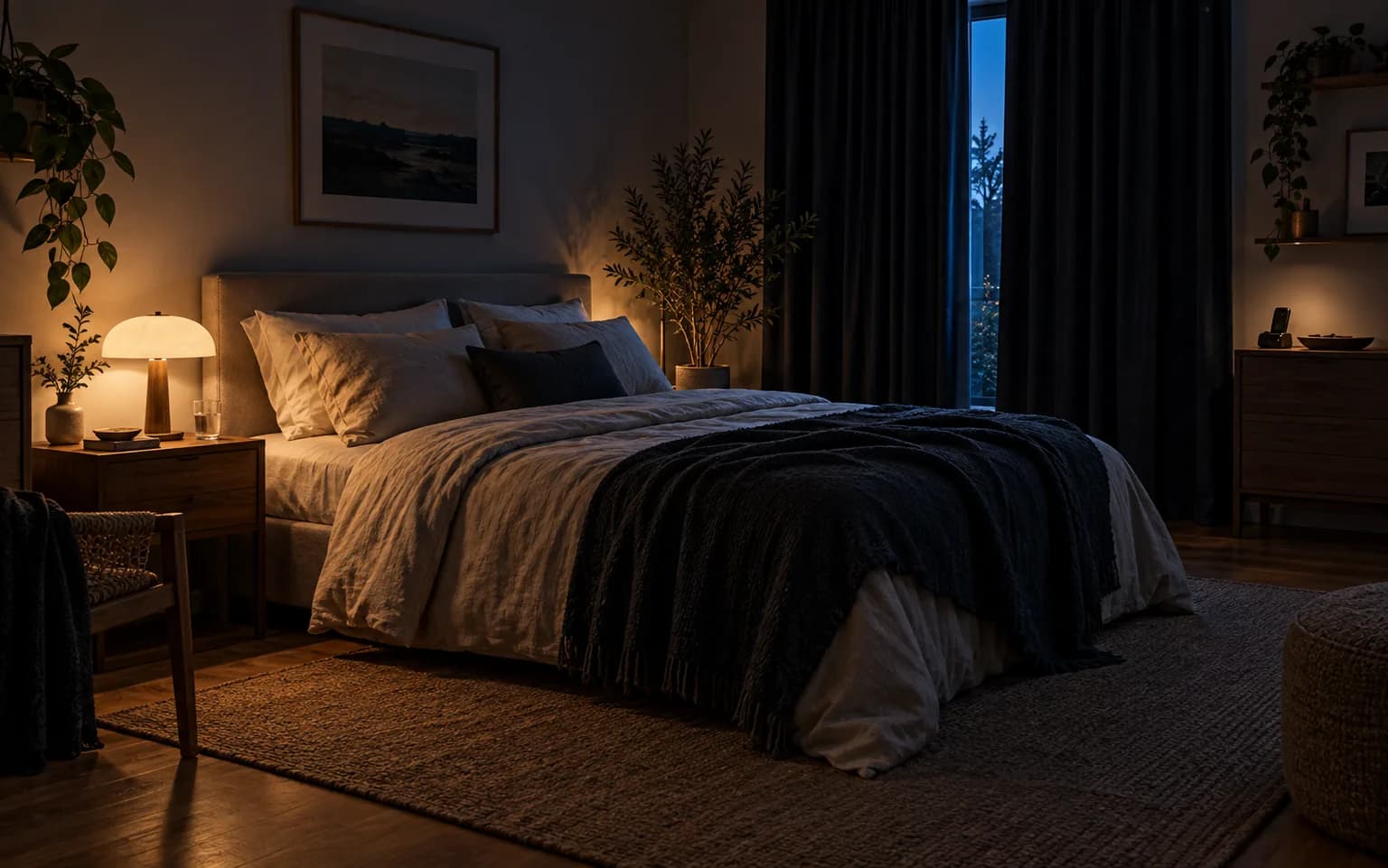
Start with three conditions: a bedroom that is dark, quiet, and comfortably cool. Then remove interruptions you can control, such as alert sounds or a bright screen beside the bed. There is no universal perfect temperature or need to buy a full set of new products.
01 / DETAIL
Light: make darkness practical
Block streetlight with curtains or an eye mask if that suits you. Cover or turn off small indicator lights that shine toward the bed. If you need a night light for safety, keep it dim rather than making the room hazardous to walk through.
The CDC and NIH both recommend a dark sleep space. The point is to remove unnecessary light, especially late in the evening, while keeping the room usable for your household.
Sources: CDC/NIOSH — Improve Sleep: Tips for Difficult Times · National Heart, Lung, and Blood Institute — Healthy Sleep Habits
02 / DETAIL
Noise: reduce interruptions first
Close a door, move a buzzing phone away, or use soft earplugs if appropriate. If you try a fan or sound machine, keep it comfortable and low. Research on continuous white noise is mixed, so treat it as an optional way to mask disturbances rather than a proven sleep solution.
Sources: CDC/NIOSH — Improve Sleep: Tips for Difficult Times · Riedy et al. — Noise as a sleep aid: systematic review
03 / DETAIL
Temperature and comfort: adjust, then observe
The room should feel comfortably cool to you; bedding and individual preferences matter. Try one small adjustment at a time, such as lighter bedding or moving the thermostat a little, and notice whether the room feels easier to settle into.
A comfortable mattress and pillow also matter, but an expensive replacement should not be your first step if light, sound, or phone alerts are the obvious problem.
Sources: CDC/NIOSH — Improve Sleep: Tips for Difficult Times · National Heart, Lung, and Blood Institute — Healthy Sleep Habits
KEEP IN MIND
Key points
- Address light, noise, and temperature before shopping.
- Keep safety and household needs in mind.
- Change one variable at a time.
SOURCE NOTES
References
We link to the public guidance and research behind factual statements. Source material can change; this article was last reviewed by the ACHELESS editorial team on 2026-09-23.
For general information only. This article is not personalized medical advice or a statement of ACHELESS device indications. Read the device user guide and speak with a qualified professional about individual medical questions.