THE SHORT ANSWER
Start here.
White noise may mask an occasional outside sound, but evidence that continuous noise improves sleep is uncertain. A systematic review found very low-quality evidence and mixed results. If you enjoy it, keep the volume comfortable, avoid placing a speaker close to your ears, and compare it with simpler noise-reduction steps.
01 / DETAIL
Masking a sound is different from improving sleep
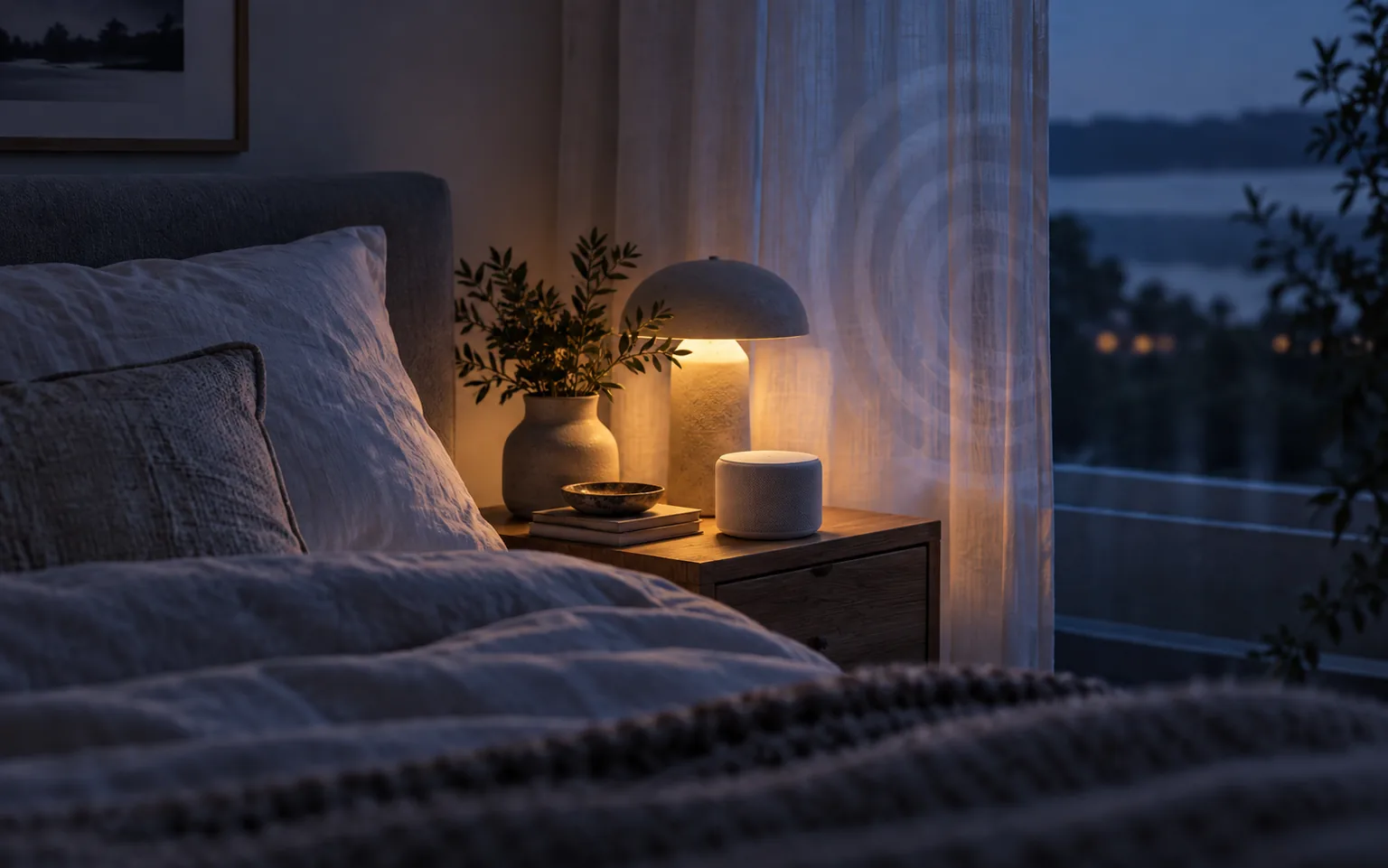
A steady fan or sound machine can make a sudden hallway noise less noticeable to some people. That is a practical masking effect, not evidence that the sound changes your sleep physiology or works for everyone.
A review covering 38 studies of continuous broadband noise found varied results; some studies suggested benefit and others suggested disruption. The reviewers rated evidence for improving sleep as very low quality and called for better research.
Sources: Riedy et al. — Noise as a sleep aid: systematic review
02 / DETAIL
A sensible way to test it
First fix obvious disturbances: close the window, silence notifications, or use curtains that reduce street noise. Then, if you prefer a steady sound, choose a quiet level that does not force you to raise your voice. Stop if the noise itself becomes distracting.
The CDC recommends a quiet sleeping environment and suggests soft earplugs for some noisy settings. Compare a sound machine with these simpler ways to reduce interruption.
Sources: CDC/NIOSH — Improve Sleep: Tips for Difficult Times
03 / DETAIL
What to remember
“White,” “pink,” and “brown” noise labels describe different sound profiles. The color name tells you about the sound, not which one you will personally prefer. Keep the choice simple and comfortable.
KEEP IN MIND
Key points
- The research is mixed and low certainty.
- Start by reducing disruptive noise.
- Keep any continuous sound comfortable and optional.
SOURCE NOTES
References
We link to the public guidance and research behind factual statements. Source material can change; this article was last reviewed by the ACHELESS editorial team on 2026-09-23.
For general information only. This article is not personalized medical advice or a statement of ACHELESS device indications. Read the device user guide and speak with a qualified professional about individual medical questions.