THE SHORT ANSWER
Start here.
A warm shower before bed and a comfortably cool bedroom may be a useful combination for some people. A research review found an association between warm bathing one to two hours before bed and several improved sleep measures, but the evidence has limits. Choose a safe, comfortable water temperature; there is no need to force a precise protocol.
01 / DETAIL
Why people pair warmth with a cool room
A 2019 systematic review looked at warm showers and baths before bedtime. The authors pooled comparable results from 13 studies and found promising associations for some sleep measures. They also emphasized that the research base was limited and that ideal timing, duration, and mechanism still need more study.
Public-health advice also recommends a quiet, dark, cool bedroom. The practical idea is to feel comfortable as your evening becomes less active, not to chase a fixed temperature number.
Sources: Haghayegh et al. — Warm bathing before bedtime: systematic review · National Heart, Lung, and Blood Institute — Healthy Sleep Habits
02 / DETAIL
Try the easy version
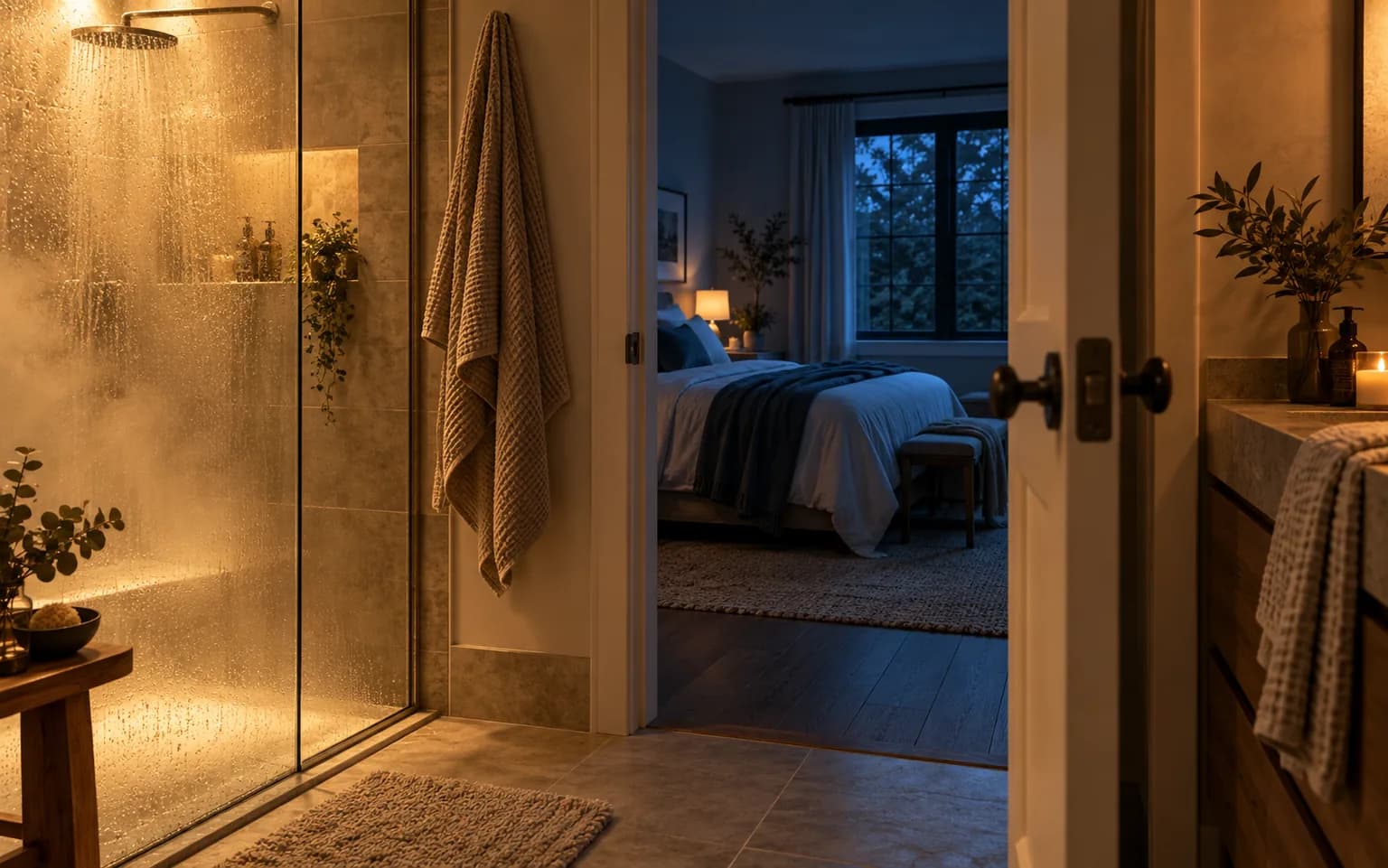
If a shower is already part of your evening, let it become a simple transition away from work or screens. Keep the water warm rather than uncomfortably hot. Afterward, make the room comfortably cool and choose bedding that fits the season.
If the shower energizes you or is impractical, skip it. The NIH suggests a warm bath as one option among several quiet activities before bed, not as a requirement.
Sources: National Heart, Lung, and Blood Institute — Healthy Sleep Habits
03 / DETAIL
Adapt to your comfort
Water temperature, the season, and your room all affect how the routine feels. Adjust for comfort, especially if heat bothers you, and keep whichever parts make the evening easier to manage.
KEEP IN MIND
Key points
- A warm shower is optional; comfort comes first.
- Keep the bedroom comfortably cool.
- The research is promising but not definitive.
SOURCE NOTES
References
We link to the public guidance and research behind factual statements. Source material can change; this article was last reviewed by the ACHELESS editorial team on 2026-09-23.
For general information only. This article is not personalized medical advice or a statement of ACHELESS device indications. Read the device user guide and speak with a qualified professional about individual medical questions.