THE SHORT ANSWER
Start here.
Bright light in the evening can shift the body’s sleep-wake timing and make it harder to wind down. A screen is one source, but brightness, timing, and what you are doing on it all matter. Reduce bright light and stimulating screen activity before bed; a blue-light setting alone is not a complete evening routine.
01 / DETAIL
The useful distinction is light plus behavior
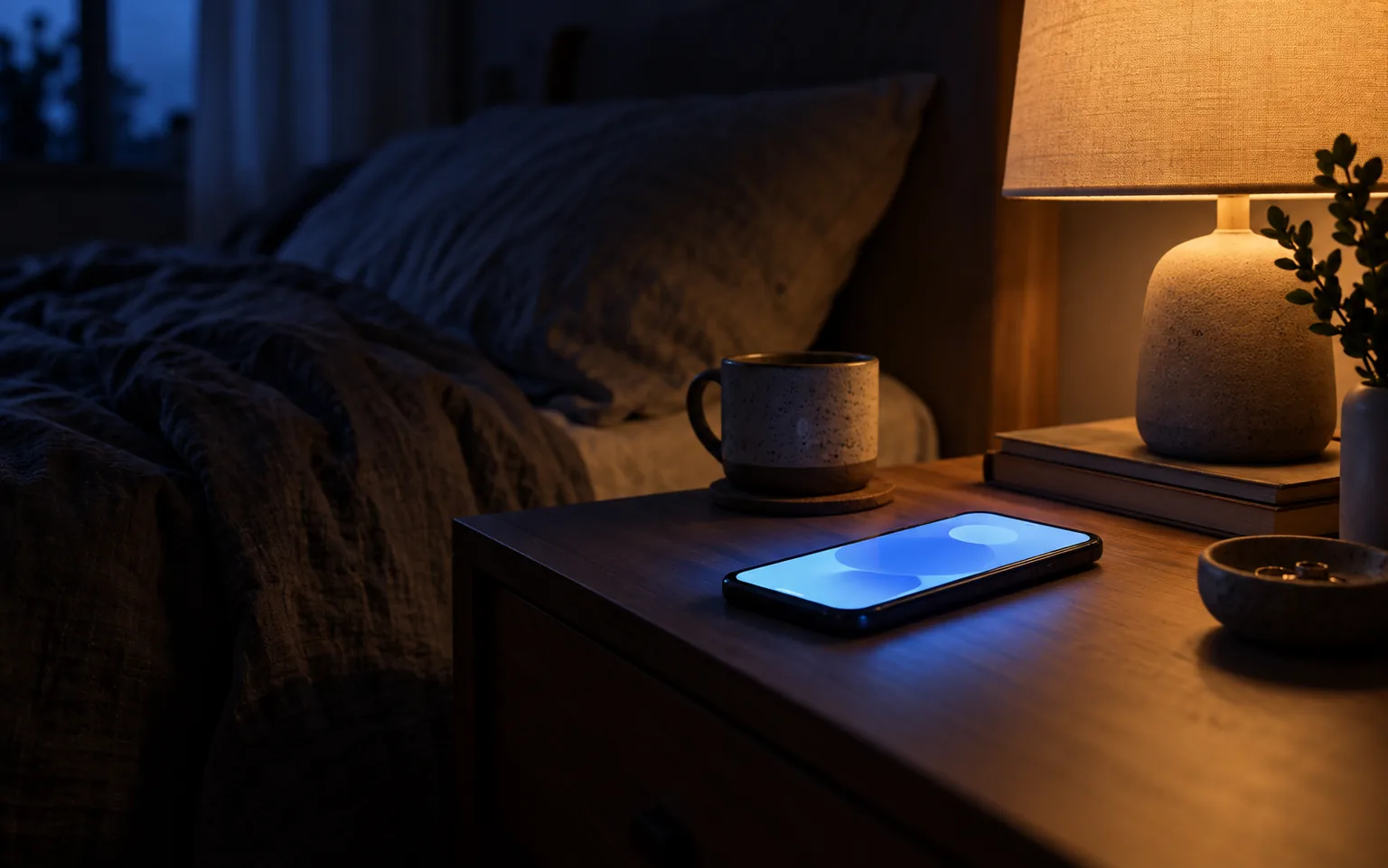
The NIH recommends avoiding bright artificial light in the hour before bed. CDC training materials explain that the circadian system is sensitive to light in the evening and morning, with different timing effects. A late-night phone can also keep you reading messages or working long after you meant to stop.
This is why a warm display setting is only one small adjustment. Lower the screen brightness, turn off notifications, and choose an activity with a natural stopping point. If you need a screen for accessibility or work, do not assume one imperfect night has undone everything.
Sources: National Heart, Lung, and Blood Institute — Healthy Sleep Habits · CDC/NIOSH — Effects of Light on Circadian Rhythms
02 / DETAIL
Set up an easier last hour
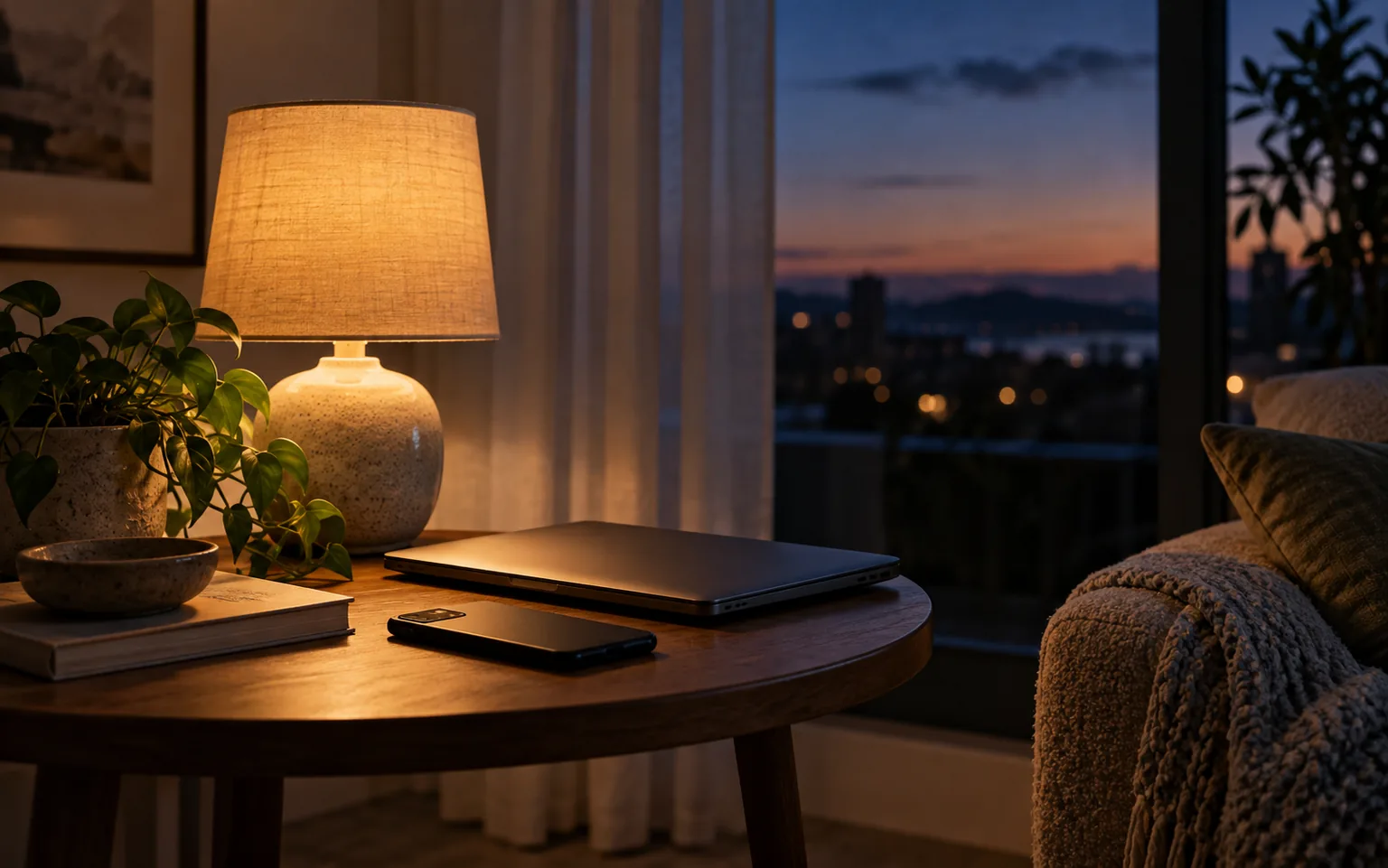
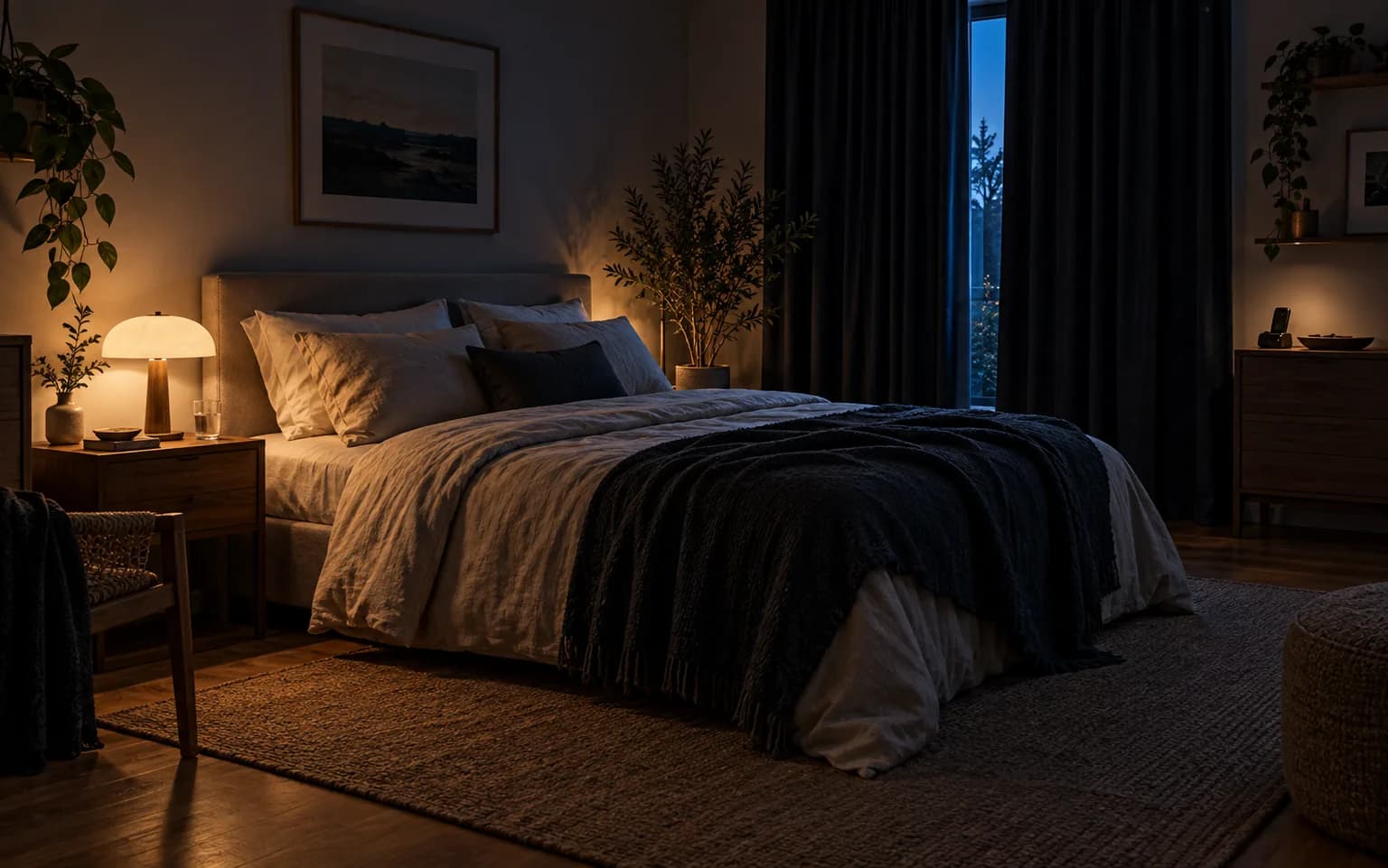
Move bright tasks earlier where you can. Use a small lamp instead of overhead lighting, charge your phone away from the bed, and decide when your final email check ends. The aim is less light and fewer demands competing for attention.
Morning light is the other side of the same rhythm. Regular outdoor light during the day helps reinforce a consistent schedule, although timing advice can differ for shift workers.
Sources: National Heart, Lung, and Blood Institute — Healthy Sleep Habits · CDC/NIOSH — Effects of Light on Circadian Rhythms
03 / DETAIL
When to seek help
If your schedule or sleep difficulty is persistent, ask a clinician about individualized advice. Bright-light timing is more complex when you work nights or have a circadian rhythm concern.
KEEP IN MIND
Key points
- Dim light and reduce stimulating activity.
- A screen filter alone is not the whole plan.
- Light timing differs for shift work.
SOURCE NOTES
References
We link to the public guidance and research behind factual statements. Source material can change; this article was last reviewed by the ACHELESS editorial team on 2026-09-23.
For general information only. This article is not personalized medical advice or a statement of ACHELESS device indications. Read the device user guide and speak with a qualified professional about individual medical questions.