THE SHORT ANSWER
Start here.
If your evening feels crowded with screens, alerts, and unfinished tasks, give yourself a short transition before bed. Lower the light, choose one quiet activity, and leave tomorrow’s tasks on paper. The goal is a routine you can repeat on an ordinary night.
01 / DETAIL
Change the environment first
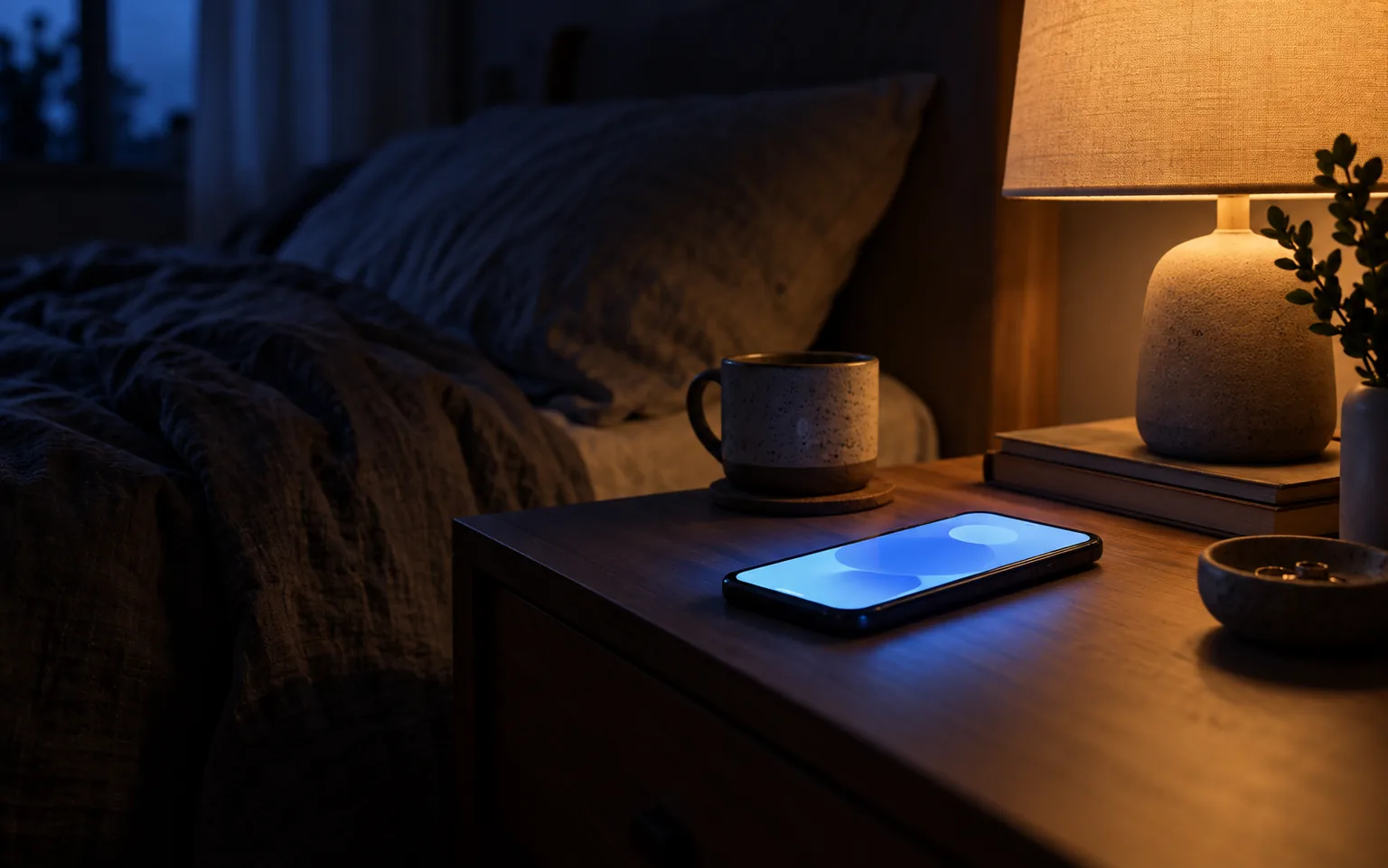
A wind-down is easier when the room does some of the work. Dim bright overhead lights, silence nonessential notifications, and make the bedroom as quiet, dark, and comfortably cool as you can. The NIH recommends using the hour before bed for quiet time and limiting bright artificial light.
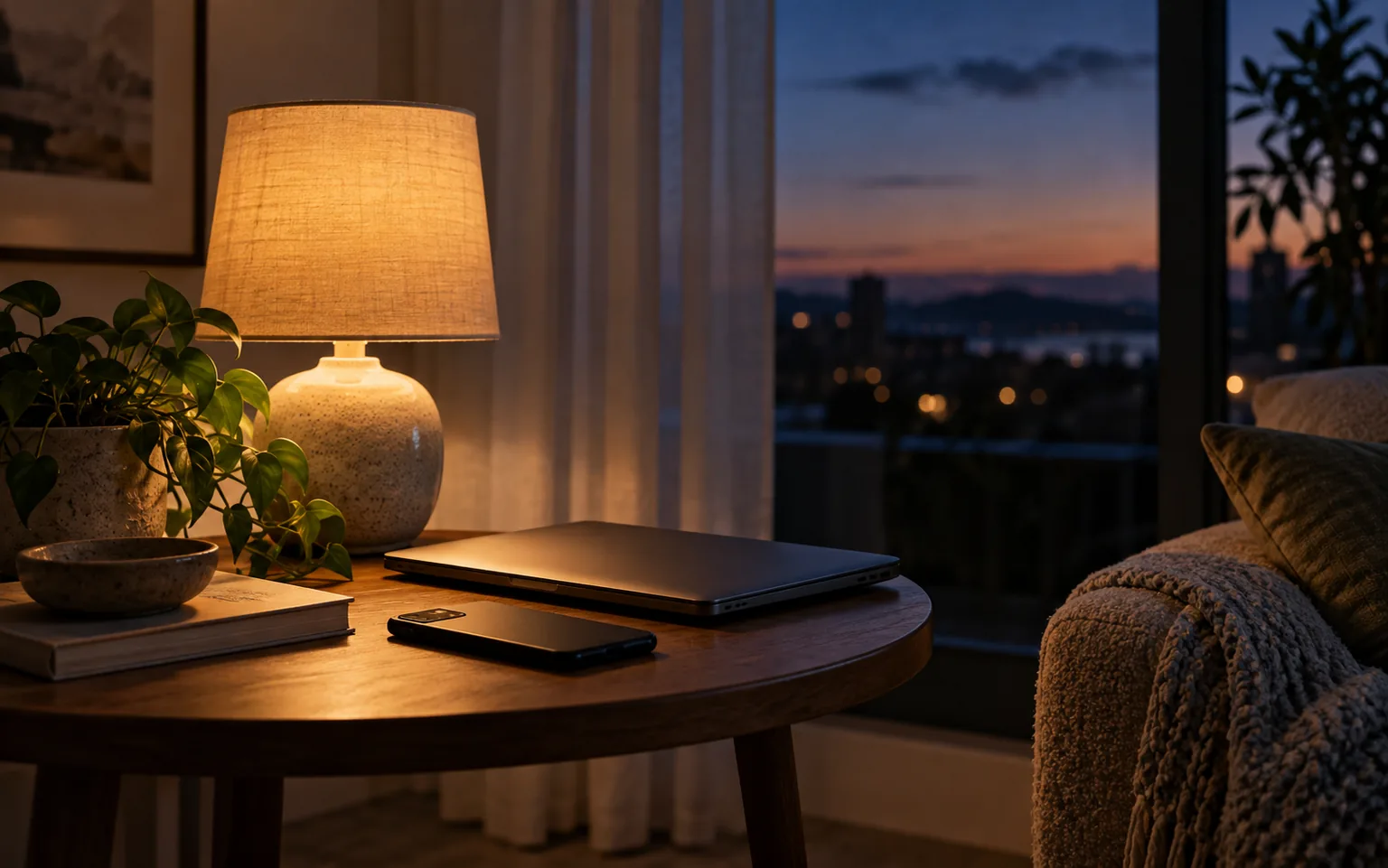
You do not need to make your home silent. If you share a space, try a lamp instead of a ceiling light, move a charger outside the bedroom, or set a single do-not-disturb window. Pick the changes that fit your actual home.
Sources: National Heart, Lung, and Blood Institute — Healthy Sleep Habits · CDC/NIOSH — Improve Sleep: Tips for Difficult Times
02 / DETAIL
Use a repeatable 15-minute transition
Start by setting out what you need for tomorrow. Then put away the device most likely to pull you back into work or scrolling. Spend the remaining minutes on a low-effort activity such as reading, stretching gently, or listening to something quiet.
Keep the sequence in the same order on busy nights. A routine does not have to be long to be recognizable; consistency matters more than adding more steps.
Sources: National Heart, Lung, and Blood Institute — Healthy Sleep Habits
03 / DETAIL
Make the routine fit your week
Choose the two steps that are easiest to keep. On a late night, use only those two; on a quieter night, add reading or another gentle activity. The value is in having a predictable transition you can return to.
KEEP IN MIND
Key points
- Reduce bright light and unnecessary alerts.
- Choose one easy activity you can repeat.
- Keep a shorter version for late nights.
SOURCE NOTES
References
We link to the public guidance and research behind factual statements. Source material can change; this article was last reviewed by the ACHELESS editorial team on 2026-09-23.
For general information only. This article is not personalized medical advice or a statement of ACHELESS device indications. Read the device user guide and speak with a qualified professional about individual medical questions.