THE SHORT ANSWER
Start here.
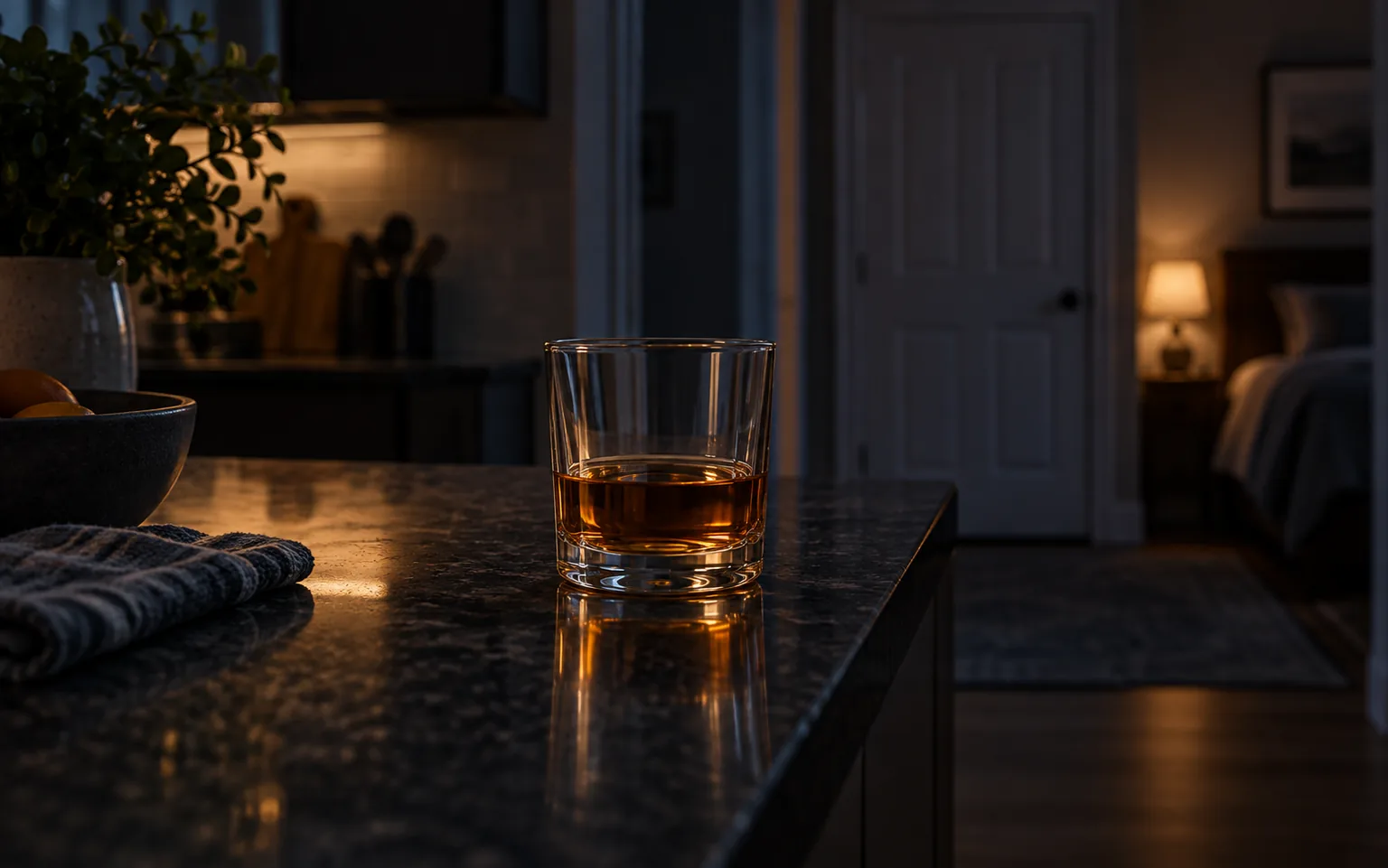
Alcohol can make some people feel drowsy, but it is not a reliable sleep strategy. The NIH notes that alcohol before bed can lead to lighter sleep and more waking during the night. If a drink is part of your evening, pay attention to timing and quantity rather than treating it as a sleep aid.
01 / DETAIL
Drowsiness is not the whole night
A person may feel sleepy after alcohol and still have a disrupted night. NIH guidance advises avoiding alcoholic drinks before bed; its insomnia information specifically notes that alcohol can make sleep lighter and increase the chance of waking. These are general health sources, not findings about any ACHELESS product.
Sources: National Heart, Lung, and Blood Institute — Healthy Sleep Habits · National Heart, Lung, and Blood Institute — Insomnia Treatment
02 / DETAIL
Choose an evening cue that does not rely on a drink
If the appealing part of a nightcap is the pause at the end of a day, keep the pause and change the ritual. Try a non-caffeinated drink, a short conversation, or a quiet reading window. It should fit your preferences without implying that a specific beverage has a medical effect.
Heavy meals, caffeine, and bright screens can also compete with an evening wind-down. Changing several things at once makes it harder to tell what feels useful for you.
Sources: National Heart, Lung, and Blood Institute — Healthy Sleep Habits
03 / DETAIL
When to ask for support
If a drink has become the only way you can imagine ending the day, consider what part of that ritual you value: a pause, a familiar glass, or time away from screens. That can guide a more useful evening alternative.
KEEP IN MIND
Key points
- Feeling drowsy does not ensure restful sleep.
- The NIH advises against alcohol before bed.
- Use a non-alcohol routine as your evening cue.
SOURCE NOTES
References
We link to the public guidance and research behind factual statements. Source material can change; this article was last reviewed by the ACHELESS editorial team on 2026-09-23.
For general information only. This article is not personalized medical advice or a statement of ACHELESS device indications. Read the device user guide and speak with a qualified professional about individual medical questions.