This isn’t a contradiction. It’s a signal that fatigue and relaxation are not the same thing.
Fatigue vs. Relaxation: Why the Body Needs Both
Fatigue simply means your body has spent energy. Relaxation, however, is a neurological state — one that tells your body it is safe to rest.
Sleep requires more than tired muscles. It requires the nervous system to shift out of “alert mode.”
When that shift doesn’t happen, the body may stay partially activated, even while lying still in bed.
- Feeling sleepy but restless
- A tense jaw or tight neck when lying down
- Shallow breathing at night
- Waking up feeling unrefreshed
The Role of the Nervous System in Sleep
Your nervous system constantly scans for safety. If it senses unresolved tension — especially in areas like the jaw, neck, or upper shoulders — it may delay the sleep process.
This is why many people experience:
- Jaw clenching at night
- Neck stiffness before bed
- A subtle sense of “holding on” even while resting
These signals tell the body to stay alert, not to sleep.
Why the Body Struggles to “Switch Off” at Night
During the day, movement and distraction can mask tension. At night, when everything becomes quiet, the body finally has space to feel what it has been holding.
If tension remains unresolved, the nervous system may interpret bedtime as unfinished business — not recovery time.
This can result in:
- Difficulty falling asleep
- Light, easily interrupted sleep
- Early waking without feeling rested
Supporting Relaxation Without Forcing Sleep
Sleep cannot be forced. It must be allowed.
That’s why growing interest has emerged around non-invasive approaches that support relaxation rather than sedate the body.
These approaches focus on:
- Encouraging the nervous system to downshift
- Reducing localized tension
- Supporting the body’s natural transition into rest
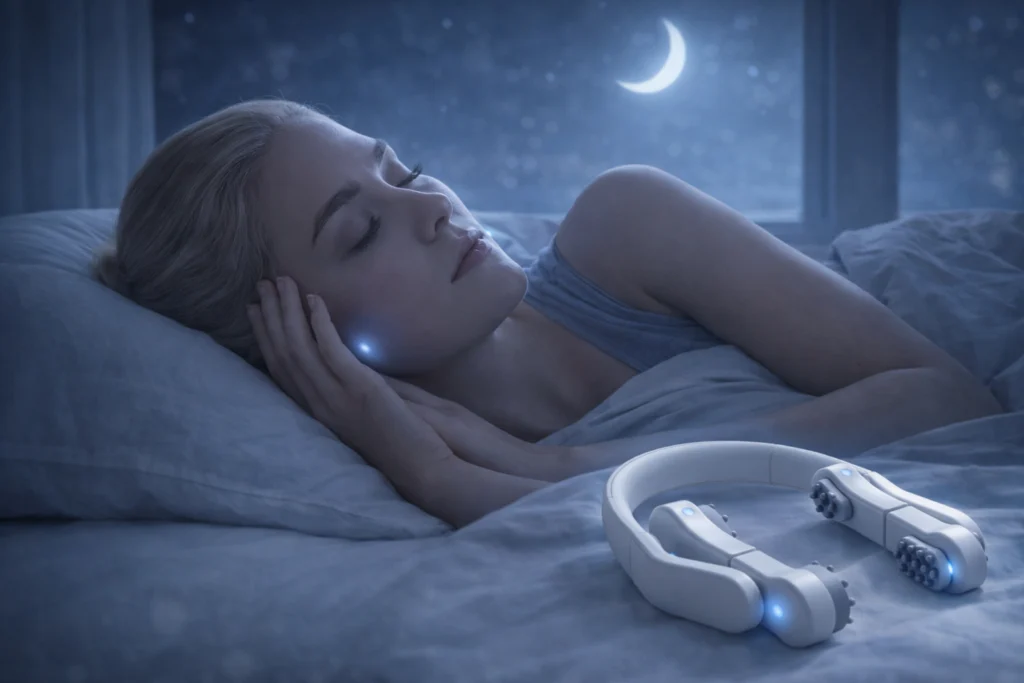
Wearable relaxation-support technologies are one example being explored as part of modern sleep routines.
Who May Benefit From This Understanding
This perspective may resonate with people who:
- Feel exhausted but struggle to relax at night
- Experience jaw or neck tension before sleep
- Prefer non-medication-based sleep support
- Want better sleep without forcing the body
If sleep challenges persist, professional guidance is always recommended.
Final Thought
If your body feels tired but not relaxed, sleep may not be missing — relaxation is.
Understanding how tension and nervous system balance affect sleep can be a powerful step toward deeper, more restorative rest.