Why Jaw and Neck Tension Gets Worse at Night — and How It Affects Sleep
Many people notice an odd pattern:
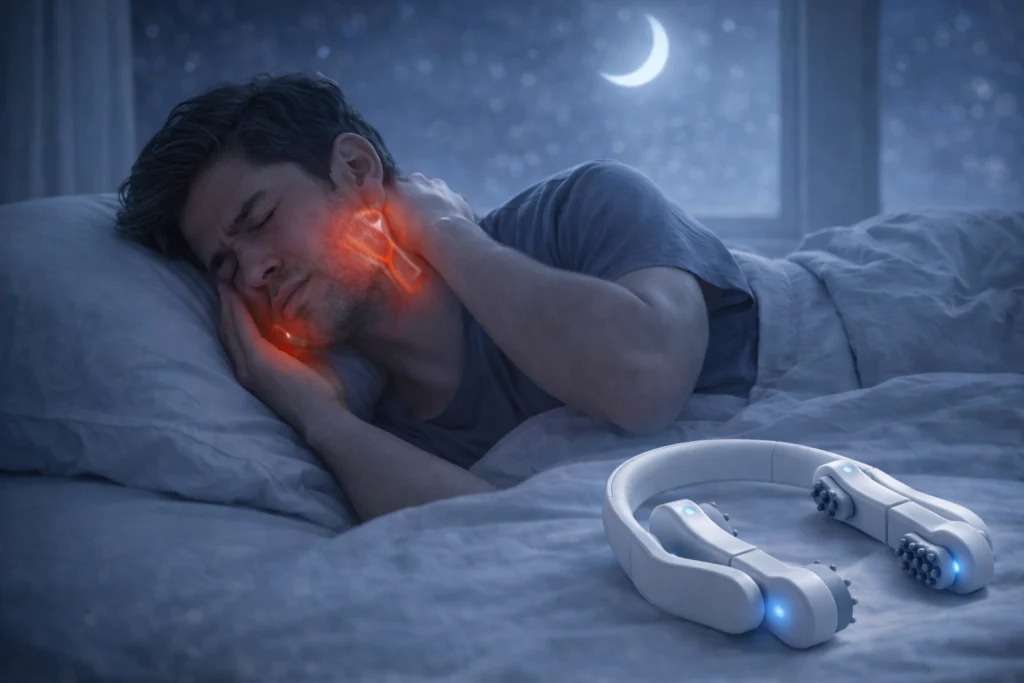
their jaw feels tight, their neck feels uncomfortable — but only at night.
During the day, these sensations may barely register.
At night, however, they become impossible to ignore.
This isn’t a coincidence.
Why Tension Feels Stronger at Night
Throughout the day, your body is in motion.
Movement, conversation, and distraction often mask low-level tension.
At night, when everything slows down, the body finally has space to feel what it has been holding.
For many people, that tension concentrates in specific areas:
- The jaw
- The neck
- The upper shoulders
These areas are closely connected to the nervous system’s stress response.
The Jaw–Neck Connection to the Nervous System
The jaw and neck play a critical role in how the body processes stress.
When the nervous system remains activated, these muscles often stay subtly engaged — even when you’re resting.
This can show up as:
- Jaw clenching or pressure when lying down
- Neck stiffness when trying to sleep
- A feeling of “holding tension” without realizing it
These signals tell the body to stay alert, not to rest.
How Jaw and Neck Tension Disrupt Sleep
Sleep requires the nervous system to downshift into a state of safety.
When tension remains in the jaw or neck, the body may interpret it as unfinished stress — delaying the transition into sleep.
Common effects include:
- Difficulty falling asleep
- Light or easily disrupted sleep
- Waking up with jaw tightness or neck discomfort
- Feeling unrested despite enough time in bed
Even subtle tension can interfere with deep, restorative rest.
Why Relaxation Techniques Don’t Always Reach These Areas
Stretching, breathing exercises, and meditation can help — but they may not always reach deeply held tension around the jaw and neck.
These areas often respond best to localized, gentle relaxation support, rather than effort-based techniques.
This is why some people find that general sleep tips work partially — but not completely.
A Gentle, Non-Invasive Way to Support Relaxation
Rather than forcing sleep, many modern approaches focus on helping the body feel safe enough to relax on its own.
Non-invasive sleep-support technologies aim to:
- Encourage nervous system calming
- Reduce localized tension
- Support a smoother transition into rest
These approaches are designed to work with the body, not against it.
Who This Insight May Be Helpful For
This may resonate with people who:
- Experience jaw or neck tension mainly at night
- Feel exhausted but still struggle to relax
- Prefer non-medication-based sleep support
- Want better sleep without forcing the body
If symptoms persist or worsen, professional guidance is recommended.
Final Thought
If your jaw and neck feel tense at night, your body may not be resisting sleep —
it may be asking for permission to relax.
Understanding where tension lives can be the first step toward deeper, more restorative rest.