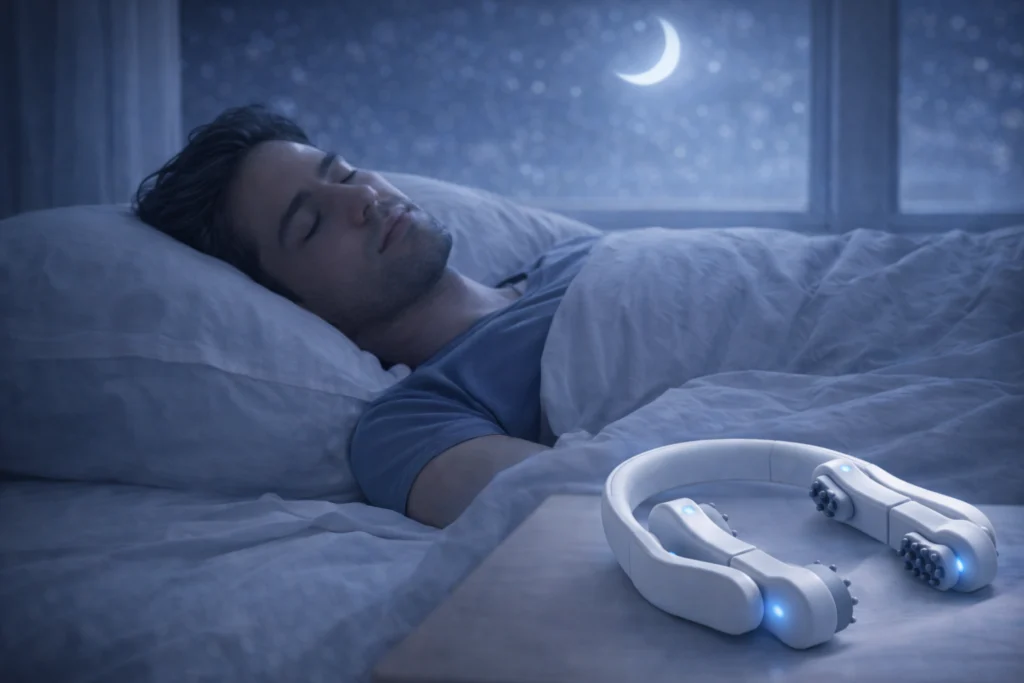
Why “Trying to Sleep” Can Make It Harder
When sleep doesn’t come easily, many people try harder.
They focus on breathing.
They adjust their position.
They count minutes.
Ironically, this effort can keep the nervous system active — doing the opposite of what sleep requires.
Sleep is not a task to complete.
It is a state the body must be allowed to enter.
The Body Needs Safety Before It Can Rest
The nervous system plays a central role in sleep.
Before deep rest can occur, the body must sense:
- Physical ease
- Reduced muscle tension
- A lack of threat or urgency
If the body remains tense — especially around the jaw, neck, or upper body — it may stay partially alert, even while lying still.
This is why many people feel:
- Exhausted but unable to switch off
- Calm mentally, yet tense physically
- Resting, but not truly recovering
Why Sedation Isn’t the Same as Relaxation
Sleep aids and force-based methods may reduce awareness, but they don’t always address underlying tension.
Relaxation is not about shutting the body down.
It’s about helping the body feel safe enough to rest on its own.
Without that signal of safety, the nervous system may remain on guard — even in silence.
A Different Way to Support Sleep
Modern sleep support is increasingly shifting away from force and toward cooperation with the body.
Rather than pushing the system into sleep, non-invasive approaches aim to:
- Encourage nervous system calming
- Reduce localized tension
- Support the body’s natural downshift into rest
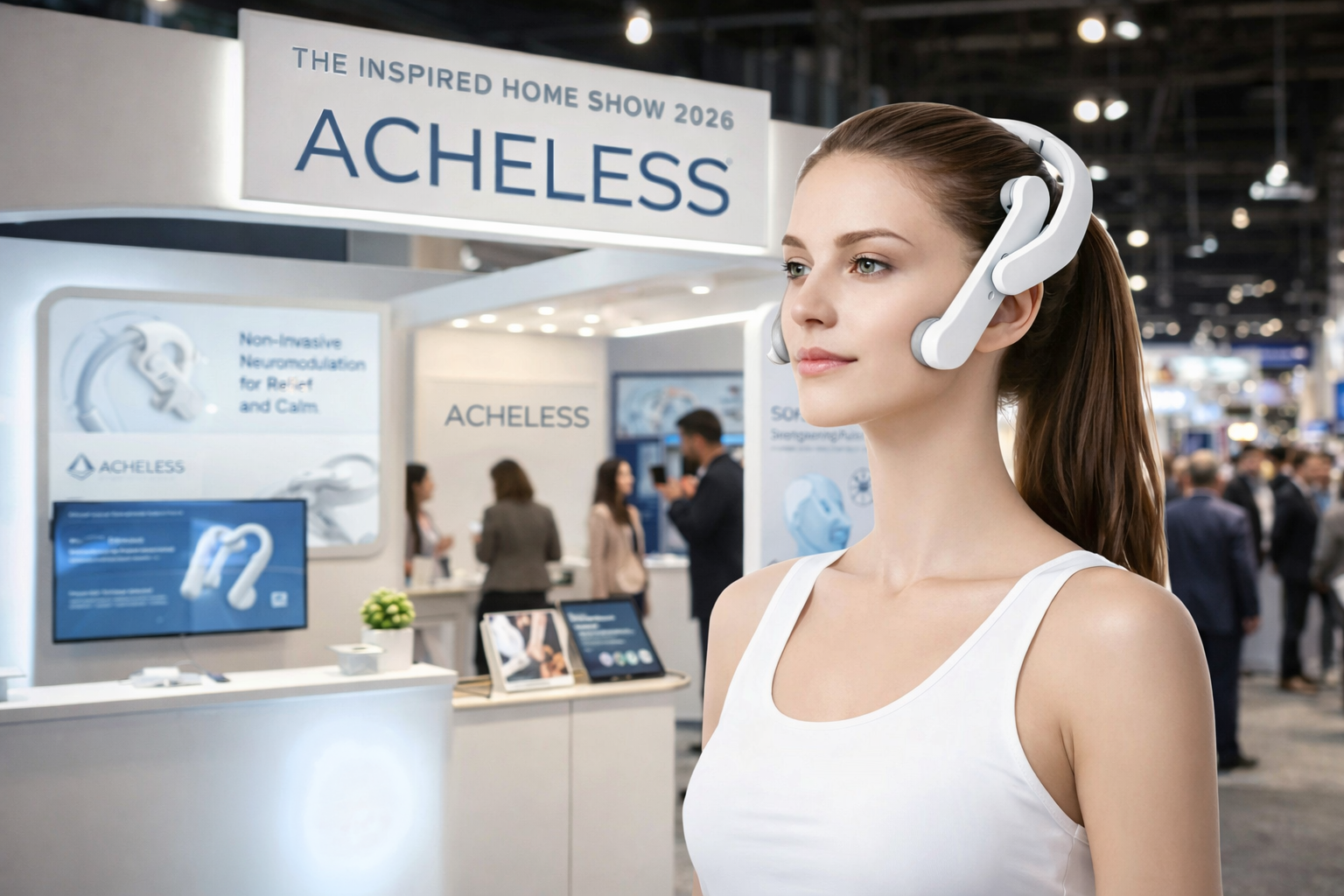
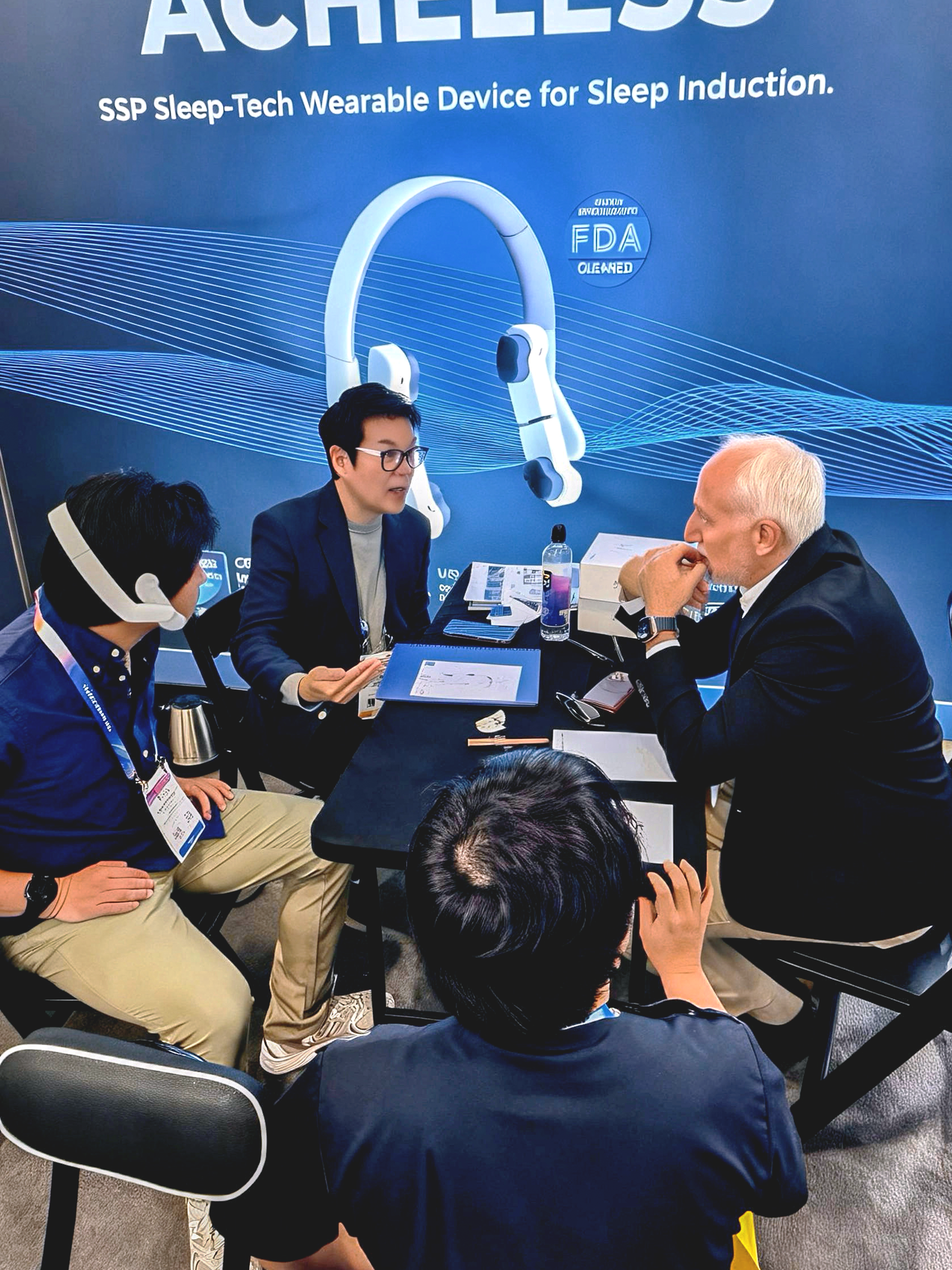
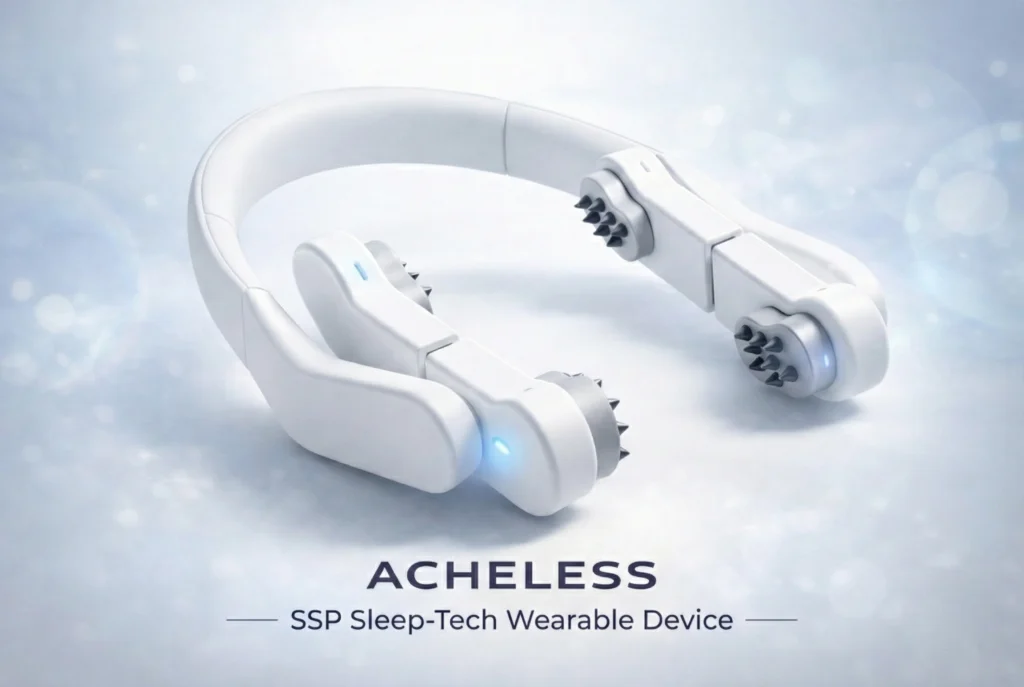
Wearable relaxation-support technologies are one example of how this philosophy is being explored.
These approaches are designed to fit into real life — without medication, pressure, or disruption.
Who This Approach May Resonate With
This perspective may be especially meaningful for people who:
- Feel tired but struggle to fully relax
- Experience nighttime jaw or neck tension
- Prefer gentle, non-medication-based support
- Want better sleep without forcing their body
As always, persistent sleep issues should be discussed with a qualified professional.
Final Thought
Sleep doesn’t need to be chased.
When the body feels safe, supported, and free of tension —
sleep often follows on its own.