What Does “Non-Invasive Sleep Support” Actually Mean?
As interest in sleep technology grows, the term non-invasive appears more often — but its meaning is rarely explained.
Non-invasive sleep support does not aim to force sleep, alter consciousness, or override the body’s natural processes.
Instead, it focuses on supporting the conditions that allow sleep to happen naturally.
This distinction matters more than most people realize.
Sleep Can’t Be Forced — It Has to Be Allowed
Sleep is not a mechanical switch.
It is a biological state that emerges when the body feels safe, relaxed, and free from tension.
When sleep is approached aggressively — through pressure, effort, or force — the nervous system may remain alert, even if the body is exhausted.
Non-invasive approaches work differently.
They aim to reduce interference, not create control.
How Non-Invasive Support Differs From Traditional Sleep Aids
Traditional sleep solutions often focus on sedation or suppression.
Non-invasive sleep support focuses on:
- Encouraging nervous system downregulation
- Reducing localized physical tension
- Supporting relaxation without altering awareness
Rather than telling the body to sleep, these approaches help the body feel ready to rest.
Why the Nervous System Is Central to Sleep Quality
The nervous system constantly evaluates safety.
If it senses unresolved tension — particularly in areas like the jaw, neck, or upper body — it may delay deep rest, even in quiet environments.
Non-invasive support recognizes this relationship and works with the body’s signaling systems, not against them.
Where Sleep-Tech Wearables Fit In
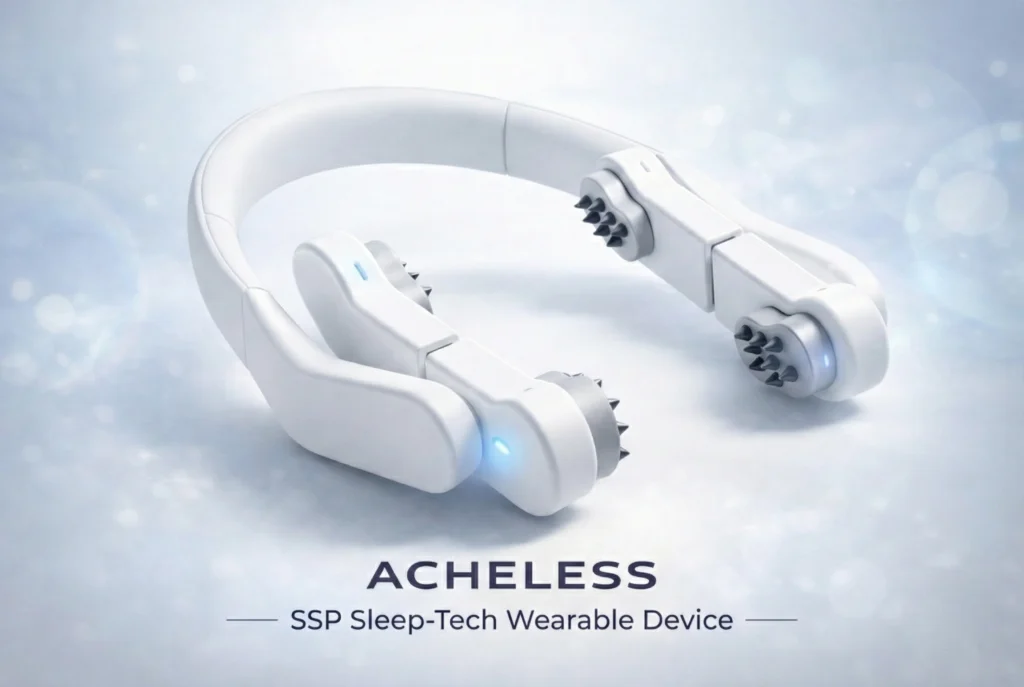
Wearable sleep-support technologies represent one modern interpretation of non-invasive sleep support.
Their role is not to replace natural sleep processes, but to:
- Support relaxation cues
- Encourage physical ease
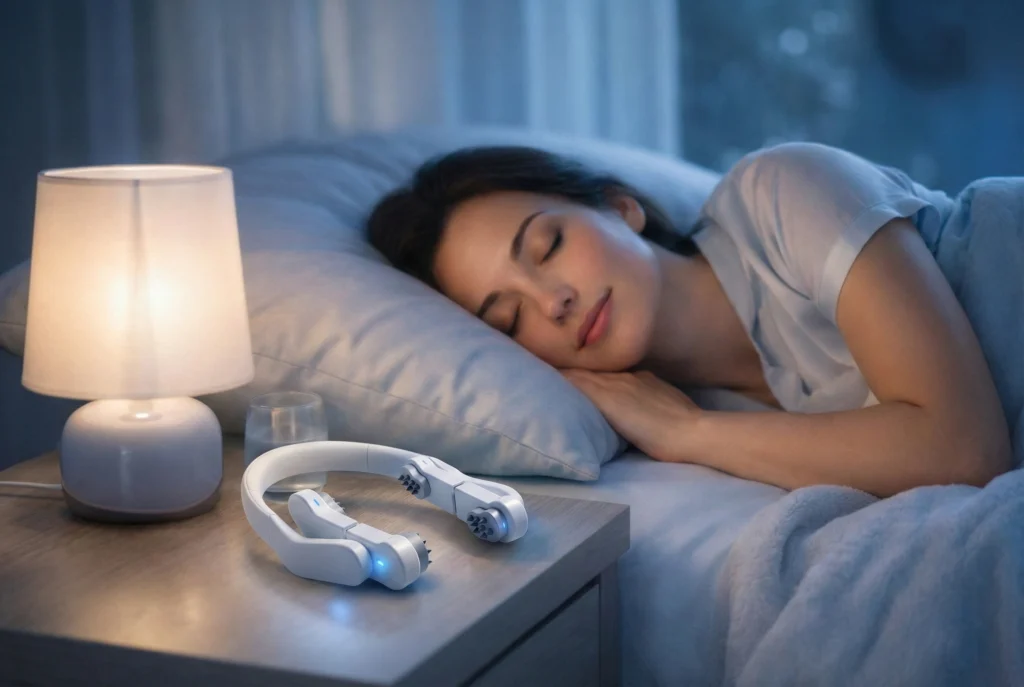
- Fit into real-life bedtime routines
They are designed to complement the body — not command it.
Who Non-Invasive Sleep Support May Be Suitable For
This approach may resonate with people who:
- Feel exhausted but struggle to relax at night
- Experience tension-related sleep disruption
- Prefer non-medication-based solutions
- Want sleep support that aligns with natural body rhythms
Persistent or severe sleep issues should always be discussed with a qualified professional.
Final Thought
Non-invasive sleep support is not about doing more.
It’s about removing barriers — so the body can do what it already knows how to do.