If sleep advice feels hit-or-miss, you’re not imagining it.
What helps one person sleep deeply may do very little for another.
That’s because sleep struggles don’t all come from the same place.
Understanding how your body reacts at night can be more helpful than following generic sleep tips.
Why Sleep Isn’t One-Size-Fits-All
Sleep is shaped by many factors:
- Nervous system sensitivity
- Daily stress patterns
- Physical tension habits
- How the body processes stimulation
As a result, people experience sleep challenges differently — even if the symptom looks the same.
Difficulty falling asleep can mean very different things depending on the person.
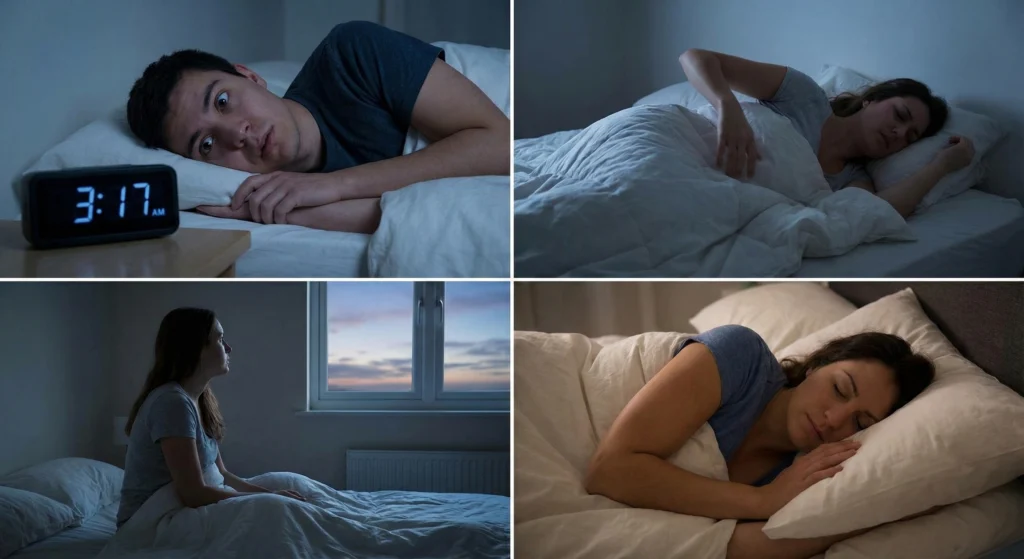
Sleep Pattern 1: The “Mentally Tired, Physically Alert” Type
Some people feel mentally drained but physically restless at night.
They may experience:
- Racing thoughts despite exhaustion
- Difficulty getting comfortable
- A sense of needing to “power down”
For this group, mental fatigue doesn’t automatically trigger physical relaxation.
The body may need additional signals of safety and calm before rest can begin.
Sleep Pattern 2: The “Physically Tense at Night” Type
Others notice tension building in specific areas as bedtime approaches.
Common signs include:
- Jaw clenching
- Neck or shoulder tightness
- Subtle discomfort when lying still
These individuals may not feel stressed during the day — but their body carries tension that only becomes noticeable at night.
Sleep can be delayed not by thoughts, but by unresolved physical tension.
Sleep Pattern 3: The “Light Sleeper” Type
Some people fall asleep easily but don’t stay asleep.
They may:
- Wake up frequently
- Feel easily disturbed by sound or movement
- Wake feeling unrefreshed
For this group, the nervous system may remain partially alert throughout the night, preventing deeper stages of rest.
Sleep Pattern 4: The “Overstimulated Before Bed” Type
This pattern is common in modern life.
Late screens, unfinished tasks, or constant stimulation can keep the nervous system active long after bedtime.
Signs include:
- Feeling wired at night
- Difficulty winding down
- Trouble shifting into rest even when tired
Here, the challenge isn’t sleep itself — it’s the transition into it.
Why Understanding Your Pattern Matters
When you understand your sleep pattern, you stop blaming yourself.
Sleep isn’t about willpower.
It’s about whether your body is receiving the right signals at the right time.
Different patterns benefit from different kinds of support — especially approaches that work with the body rather than forcing it.
A Gentle Approach for Different Sleep Types
Non-invasive, relaxation-focused support is often helpful across sleep patterns because it:
- Encourages nervous system calming
- Reduces physical tension
- Doesn’t require effort or focus
Rather than targeting sleep directly, these approaches support the conditions that allow sleep to happen naturally.
Final Thought
If sleep feels difficult, it doesn’t mean you’re doing something wrong.
It may simply mean your body has a different pattern —
one that needs understanding, not force.
Learning how your body responds at night can be the first step toward more restful sleep.